
4 Types of Third Party Logistics Providers for UK Ecommerce Guide

Third party logistics providers have quietly become one of the most important pillars of modern ecommerce. Whether you are a fast growing DTC brand, an Amazon UK seller, or a traditional retailer expanding online, the chances are you already rely on outsourced logistics in some form. The question is not whether to work with third party logistics providers, but which type is right for your business.
The challenge is that the term 3PL has become increasingly broad. As the Council of Supply Chain Management Professionals has noted, the definition has expanded to the point where almost any company offering logistics services now labels itself a 3PL. For UK businesses trying to make informed decisions, this can make comparisons difficult and costly mistakes more likely.
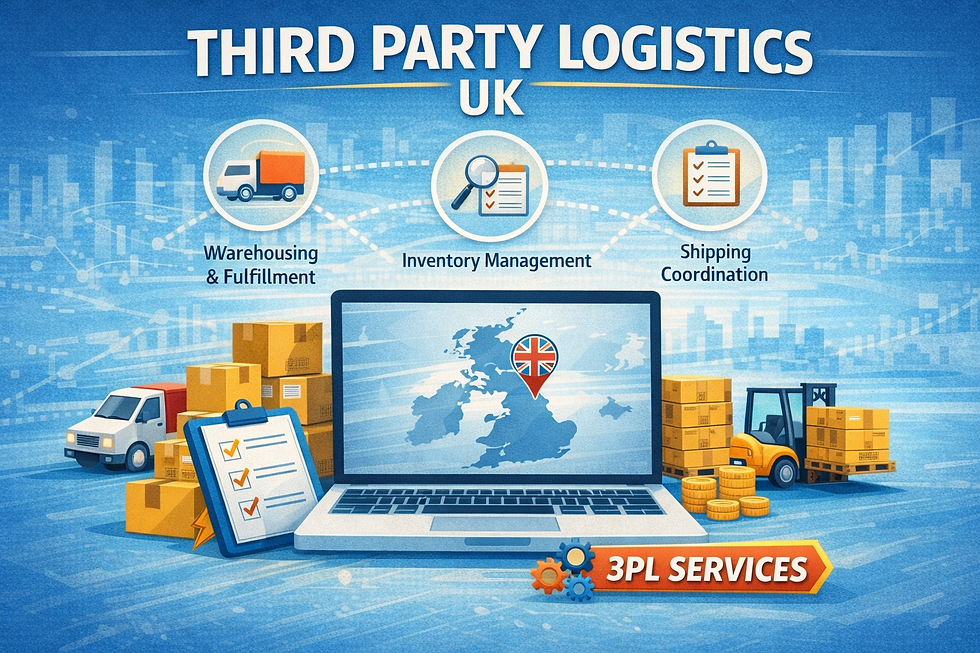
In this in depth guide, we break down the four main types of third party logistics providers, explain how they differ, and show when each makes sense for UK ecommerce businesses. We also explore why companies choose 3PL services, what to look for when selecting a partner, and how Blue30 Fulfilment supports brands with scalable, reliable fulfilment solutions.
What Are Third Party Logistics Providers
Third party logistics providers are specialist companies that manage some or all of a business’s logistics operations on its behalf. This can include warehousing, inventory management, pick and pack fulfilment, shipping, returns handling, and freight coordination.
In practical terms, a third party logistics provider sits between your business and your customers, ensuring that products move efficiently from supplier to warehouse and from warehouse to doorstep. Some providers focus on a narrow set of services, while others operate as a fully outsourced logistics department.
According to industry research, the vast majority of large UK and global enterprises use third party logistics providers, and adoption among SMEs continues to grow. Rising customer expectations, next day delivery standards, and the complexity of multichannel selling have made in house logistics increasingly difficult to manage.
For many ecommerce businesses, third party logistics providers offer a way to access advanced infrastructure, expertise, and technology without heavy upfront investment.
Why UK Businesses Choose Third Party Logistics Providers
There are clear strategic reasons why businesses across the UK choose to outsource fulfilment and logistics rather than handle everything internally.
Cost control and efficiency
Operating a warehouse, hiring staff, negotiating courier rates, and managing systems is expensive. Third party logistics providers benefit from economies of scale, shared labour, and established carrier relationships. This allows them to deliver fulfilment at a lower cost per order than most businesses could achieve alone.
Focus on growth and core activities
Logistics is operationally demanding. By outsourcing to a trusted fulfilment partner, business owners and teams can focus on product development, marketing, and customer experience instead of day to day shipping issues.
Scalability without risk
Seasonal peaks, promotions, and rapid growth are difficult to manage in house. Third party logistics providers offer flexible capacity, allowing businesses to scale up or down without committing to long term warehouse leases or permanent staffing.
Access to expertise and technology
Professional 3PLs invest heavily in warehouse management systems, transport management software, and process optimisation. UK ecommerce businesses gain access to these tools and the experience behind them without needing to build everything themselves.
Improved customer experience
Fast, accurate fulfilment and reliable delivery are key to customer satisfaction. A well run third party logistics provider can help reduce delivery times, minimise errors, and support smooth returns, all of which directly impact repeat purchases and brand trust.
The Four Types of Third Party Logistics Providers Explained
Not all third party logistics providers operate in the same way. Understanding the differences between the four main types can help you choose a partner that aligns with your operational needs and growth ambitions.
1. Standard Third Party Logistics Providers
Standard third party logistics providers offer the most basic level of service. Their core focus is on warehousing and transportation, with limited value added services.
Typical services include:
Storage of goods
Basic inbound and outbound handling
Transportation or courier coordination
These providers are often a good fit for businesses with simple supply chains, stable order volumes, and minimal customisation requirements. Costs are usually lower because services are limited in scope.
However, standard third party logistics providers may not be suitable for ecommerce brands that require fast order turnaround, branded packaging, integrations with online stores, or detailed inventory reporting.
2. Third Party Logistics Service Developers
Service developers build on the foundations of standard 3PLs by offering enhanced services and technology. In addition to storage and shipping, they provide systems and processes designed to improve visibility, control, and reliability.
Common features include:
Warehouse management systems with real time inventory tracking
Order tracking and reporting
Compliance and security measures
Cross docking and packaging optimisation
Many UK ecommerce brands fall into this category when they outgrow basic warehousing but do not need full logistics outsourcing. Service developers are particularly valuable for businesses selling across multiple channels, including Shopify, Amazon UK, and wholesale.
Blue30 Fulfilment operates in this space, offering technology driven fulfilment services designed specifically for growing ecommerce brands.
3. Third Party Logistics Customer Adapters
Customer adapters take a more hands on role in managing logistics operations. Rather than simply executing predefined tasks, they actively manage and optimise logistics processes on behalf of the client.
Services typically include:
End to end transportation management
Carrier negotiation and rate management
Process optimisation and performance monitoring
Advanced reporting and analytics
In this model, the third party logistics provider becomes deeply embedded in the client’s operations. The client retains strategic oversight but delegates most operational decision making to the provider.
Customer adapters are often used by mid sized businesses with complex supply chains that lack internal logistics expertise.
4. Third Party Logistics Customer Developers
Customer developers represent the most comprehensive and integrated form of third party logistics providers. They effectively act as the client’s outsourced logistics department, taking full responsibility for planning, execution, and continuous improvement.
This model involves:
Full control of warehousing and transport
Dedicated teams and infrastructure
Strategic supply chain planning
Long term partnerships
Customer developers are typically large, enterprise level providers working with high volume brands. The cost and commitment involved mean this option is best suited to businesses with significant scale and complexity.
Which Type of Third Party Logistics Provider Is Right for Your Business
Choosing the right type of third party logistics provider depends on your current size, growth plans, and operational complexity.
Ask yourself:
How many orders do we ship per month
How complex are our products and packaging requirements
Do we sell on multiple platforms or internationally
How much control do we want to retain over logistics decisions
For many UK ecommerce brands, a service developer model offers the right balance between cost, flexibility, and support. It provides access to professional fulfilment infrastructure while still allowing businesses to stay agile.
The UK Ecommerce Context and Logistics Considerations
The UK ecommerce landscape presents specific challenges that third party logistics providers must be equipped to handle.
Fast delivery expectations
Next day and even same day delivery have become standard in many sectors. Fulfilment centres must be strategically located and integrated with reliable courier networks.
Returns management
UK consumers expect simple and transparent returns. Third party logistics providers must offer efficient reverse logistics to protect customer satisfaction and brand reputation.
Amazon UK and multichannel fulfilment
Many brands sell through Amazon UK alongside their own websites. This requires careful inventory allocation and compliance with Amazon’s fulfilment standards.
Regulatory and compliance requirements
From VAT handling to consumer rights regulations, logistics operations must align with UK legal requirements. Experienced third party logistics providers help reduce compliance risk.
What to Look for When Choosing Third Party Logistics Providers
Beyond understanding the four types, there are practical criteria UK businesses should consider when selecting a fulfilment partner.
Technology and integrations
Ensure the provider integrates seamlessly with your ecommerce platforms, marketplaces, and accounting systems. Real time visibility is essential for inventory accuracy and customer service.
Location and delivery coverage
Warehouse location impacts delivery speed and cost. A centrally located UK fulfilment centre can reduce transit times and courier expenses.
Scalability and flexibility
Your provider should be able to handle seasonal peaks, promotions, and growth without service degradation.
Transparency and communication
Clear SLAs, reporting, and proactive communication build trust and prevent costly surprises.
Experience with your business model
A fulfilment partner that understands ecommerce, subscriptions, or marketplace selling will be better equipped to support your needs.
How Blue30 Fulfilment Supports UK Ecommerce Brands
At Blue30 Fulfilment, we specialise in providing scalable, technology led fulfilment services for UK ecommerce businesses. We work as an extension of your team, supporting growth without locking you into rigid structures.
Our fulfilment services include:
Ecommerce pick and pack fulfilment
Real time inventory management
Seamless integrations with leading ecommerce platforms
Fast, reliable UK shipping
Returns handling and stock reconciliation
Flexible scaling for peak periods
We combine the reliability of an established third party logistics provider with the agility that growing brands need. Our focus is on accuracy, transparency, and long term partnerships rather than one size fits all solutions.
Frequently Asked Questions About Third Party Logistics Providers
What is the difference between a 3PL and a fulfilment centre
A fulfilment centre is often a physical facility that handles storage and order processing. Third party logistics providers typically offer fulfilment as part of a broader service that includes systems, transport management, and operational support.
Are third party logistics providers suitable for small businesses
Yes. Many providers offer flexible pricing and scalable services designed specifically for SMEs and startups.
How much do third party logistics providers cost in the UK
Costs vary depending on storage, order volume, and service level. Pricing is usually based on a combination of storage fees, pick and pack charges, and shipping costs.
Can a 3PL handle Amazon UK fulfilment
Many third party logistics providers support Amazon FBM and inventory preparation for FBA, including labelling and compliance.
When should a business move to a 3PL
Common triggers include rising order volumes, limited warehouse space, high shipping costs, or operational bottlenecks.
Conclusion
Third party logistics providers play a critical role in the success of modern UK ecommerce businesses. Understanding the four main types of providers and how they differ allows you to choose a partner that supports your goals rather than constrains them.
Whether you need basic warehousing, technology driven fulfilment, or a fully outsourced logistics solution, the right third party logistics provider can reduce costs, improve customer experience, and unlock scalable growth.
If you are looking for a reliable UK fulfilment partner that understands ecommerce and grows with your business, Blue30 Fulfilment is here to help. Get in touch with our team to discuss how our fulfilment services can support your next stage of growth.


Comments